
Scientists recreate the rarest fabric on earth
Sea silk returns as scientists find a way to make it more sustainably

Earlier this year, I wrote about a startup called Radiant Matter that was creating sustainable sequins, and the secret to their shininess was to harness a specific nanoparticle structure that occurs in nature – the same phenomenon that gives beetles and butterfly wings their iridescence. Neural Foundry Substack commented on that post:
It turns out, this is a long-known practice. Thousands of years ago, there was a fabric made out of a fibre that was so rare and beautiful that it was reserved only for pharaohs and emperors.
This material is called byssus, and it nearly went extinct.
Now, scientists have discovered a way to recreate the fibre, more sustainably.
Hopeful headlines in tech
Polar bears in the Barents Sea are staying fat despite rapid sea ice loss
A New AI Math Startup Just Cracked 4 Previously Unsolved Problems
Inter / section
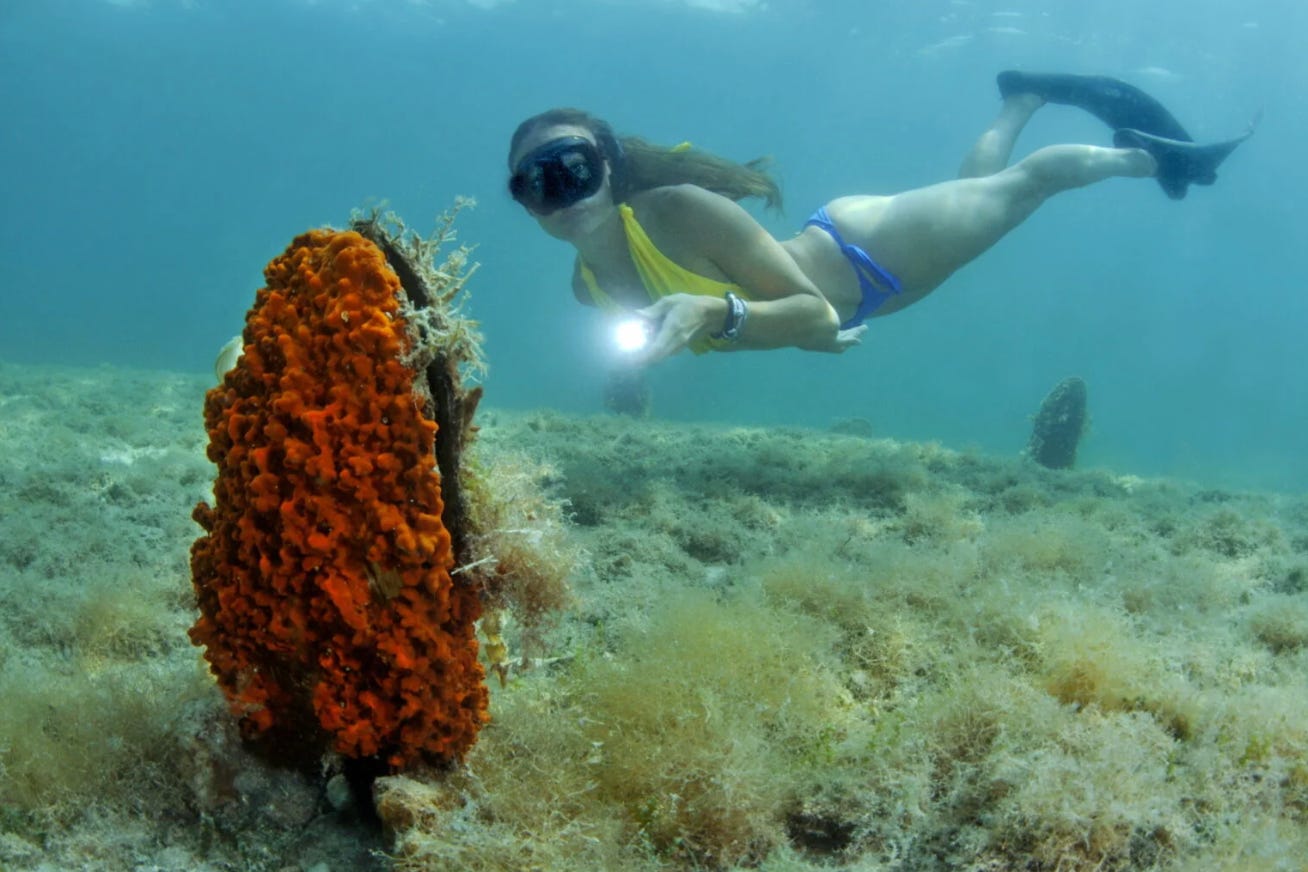
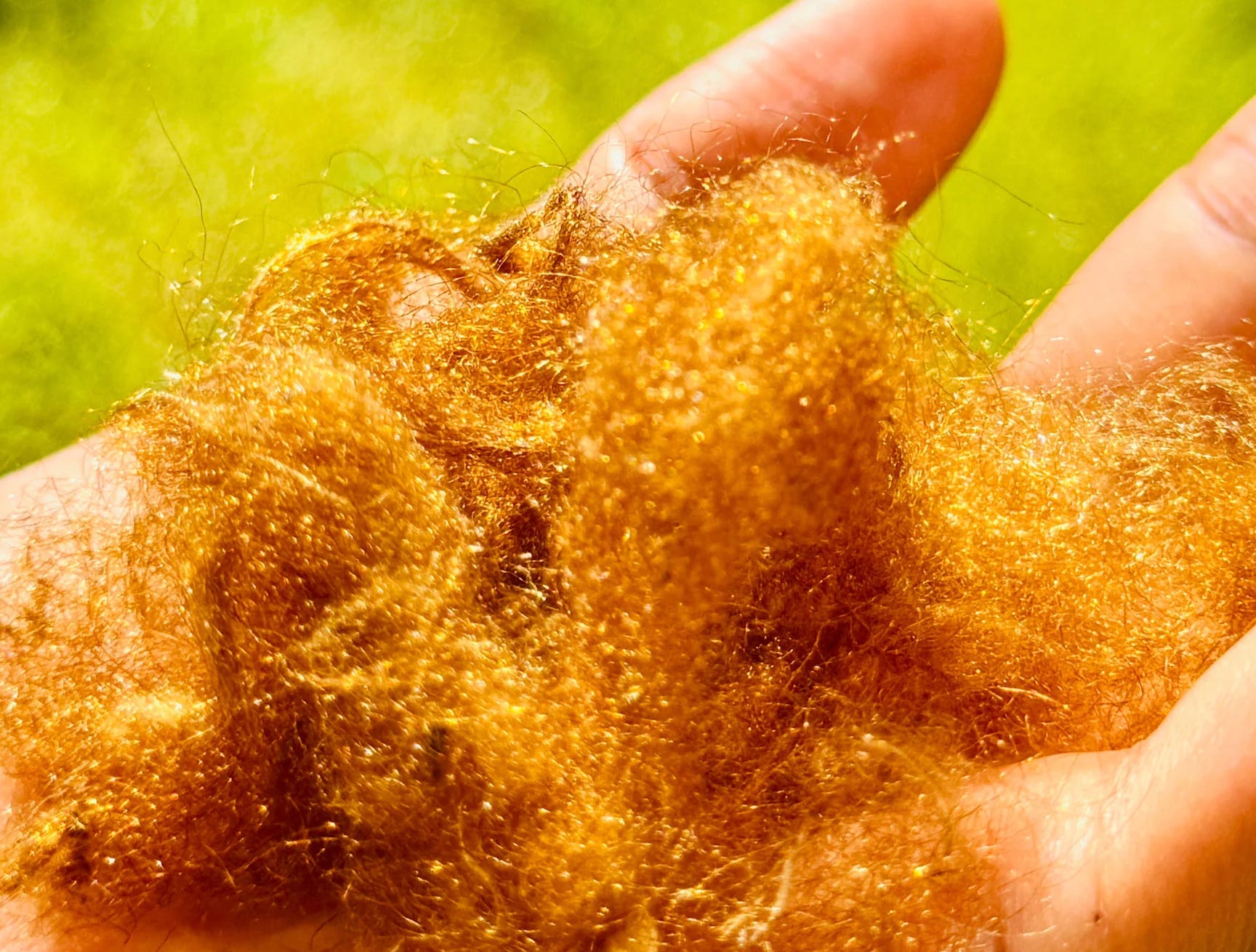
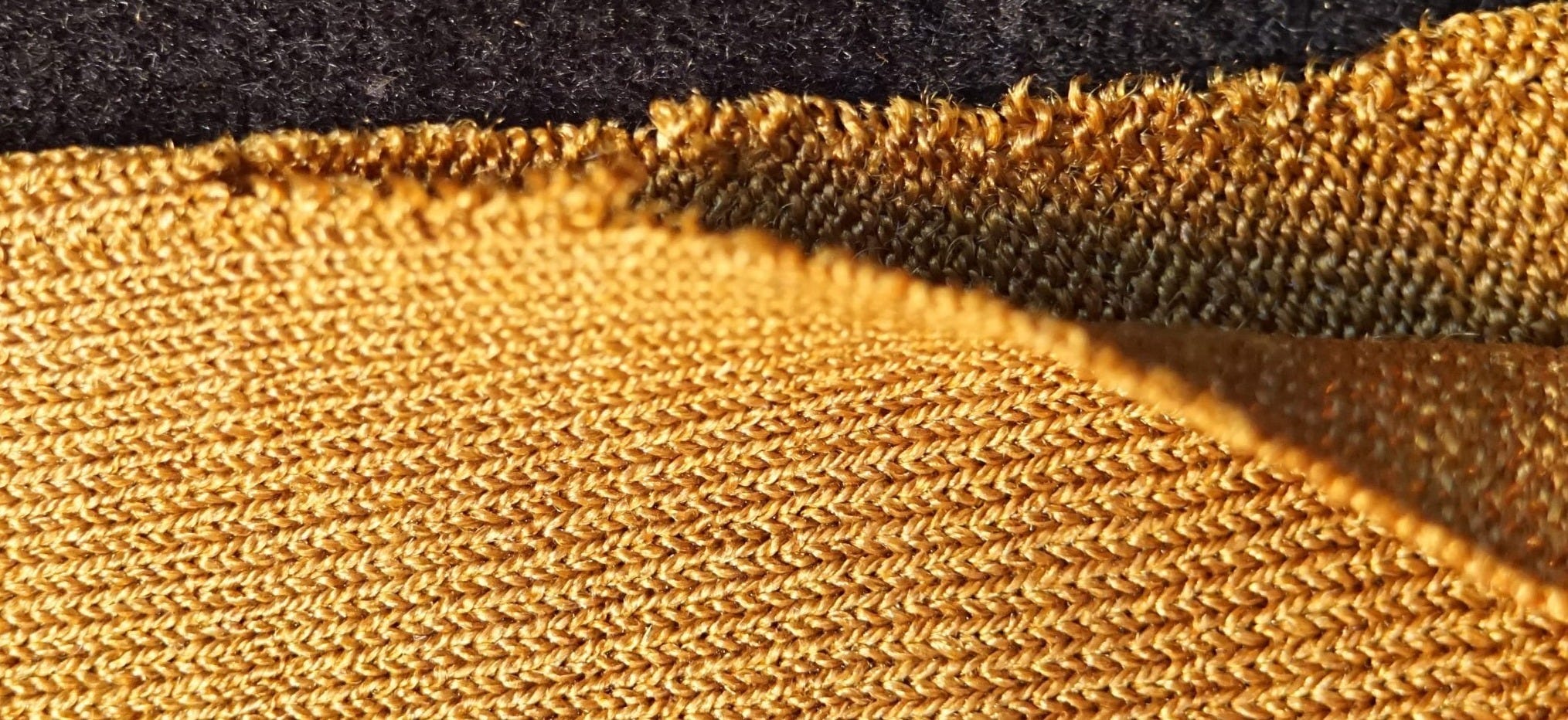
Byssus is a fibre that comes from a giant clam (the Pinna nobilis) that is found in the Mediterranean Sea. When the fibrous tufts from the clam are harvested and spun, it looks like pure spun gold. Unlike dyed fabrics, the particular nanoparticle structure that gives it is luminesence is inherent to the fibre, meaning it will never fade. When spun and knit or crocheted, it is ultralight, strong, and eternally beautiful.
The fibre has been known to humankind for ages, and it was the finest fabric known to ancient Egyptian, Roman, and Greek civilisations. It was mentioned in the Rosetta stone, was found in pharaohs’ tombs, is thought to have inspired the Greek tale of the Golden Fleece, and was even rumoured to have been the fabric that Moses laid on the first altar.
This fibre is legendary, and very, very rare.
As in many stories of beautiful natural resources, it ends in human greed. Due to overharvesting, the pinna nobilis clam was driven to near-extinction. In 1992, the EU forbade its harvesting, and in 2019 it was classified as endangered.
It looked like byssus would no longer be available. That is, until a group of scientists asked themselves a question. “Could these luminescent fibres be sourced from a non-endangered species?”
Another large clam, the Atrina pectinata, is commonly harvested in South Korea for food. It, too, has the same fibrous tufts, but these are most often discarded as waste. And these tufts were found to have the same “structural colouring” at the nano scale to give off that same undimmable glow.
According to the scientists in a paper published in April of 2025:
Atrina pectinata, a phylogenetically close relative within the Pinnidae family is identified, as a viable source of biomimetic sea silk. The byssal threads of A. pectinata can be processed using existing methods, providing a way to continue producing this historically significant textile. These threads exhibit a remarkable hierarchical structure with globular proteins organized across multiple scales and stabilized by supramolecular sugar-lectin interactions that influence their mechanical properties. Moreover, the threads display a brilliant golden hue arising from structural coloration, ensuring exceptional lightfastness, retaining their color for millennia.
TL;DR - cool, we’ve found a [more] sustainable replacement!
While researchers seem to be hoping for a payday from the “sustainable luxury” industry (they are quoted as saying “I’m hoping maybe someone in Louis Vuitton may see our work and contact us about sending a sample.”), I'm more excited that the artisanal skills of harvesting, treating, and spinning the fibre won't die out.
At the moment, there seems to be one known woman who still knows how to work with byssus – it is said that the knowledge was brought to Sardinia, where she lives, by Princess Berenice, great-granddaughter of the Biblical Herod, Herod the Great, in the first century. Today, she says she harvests the byssus without harming the Pinna nobilis.
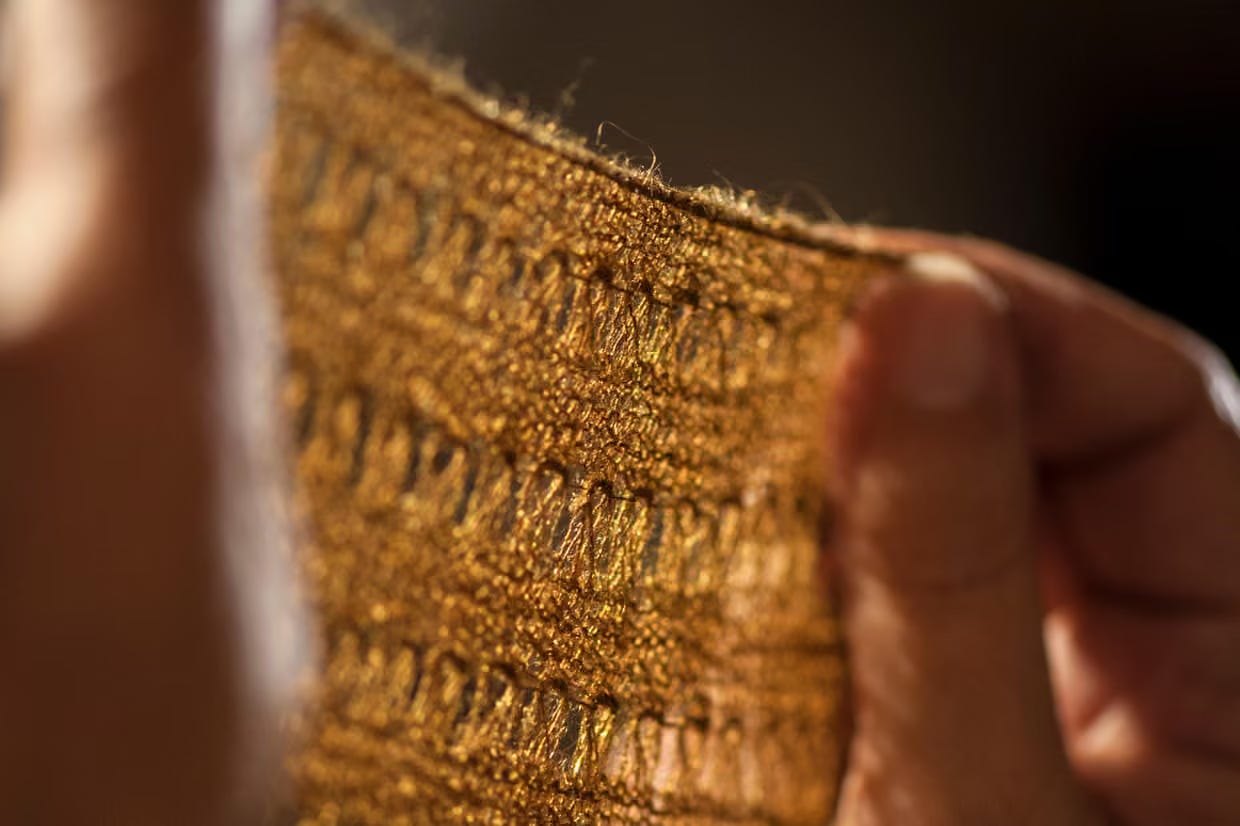
Her workshop features signs that say “nothing is for sale”, and she offers stands of byssus to visitors, usually the downtrodden, who come to her for good fortune. Because really – how could you put a price on this legendary fibre? The BBC created a fantastic article about her, I recommend the read.
While an entire discussion can be held on the topic of how sustainable the luxury industry can really be, I find it endlessly fascinating that this ancient and godlike fibre has come back into our headlines, thanks to the curiosity and ingenuity of scientists.
Media of the week
Can there be anything better than an interactive garment? Yes, an interactive garment with an unexpected twist.
This was sent to me by multiple people, so you know it’s gonna be a good one.

Project of the week
You know, the act of creating is simultaneously the most empowering thing you can do (create something from nothing – ultimate God-like behaviour), and simultaneously the most humbling. Because a lot of the time, you don't get it right.
But skill happens where trial is overcome, where iteration is practiced, where craft is refined.
For the sake of my ego, instead of calling this week a practice of humility, let’s call it a lesson in mastery :D
Here you can see the progression of these beaded mittens. The first orange pair, too small. The next attempt (abandoned mid-way), was far too large. Then we land in the middle – just right. At least where size is concerned. Because now, as you can see, the beads are not popping nearly as beautifully as on the orange backdrop.
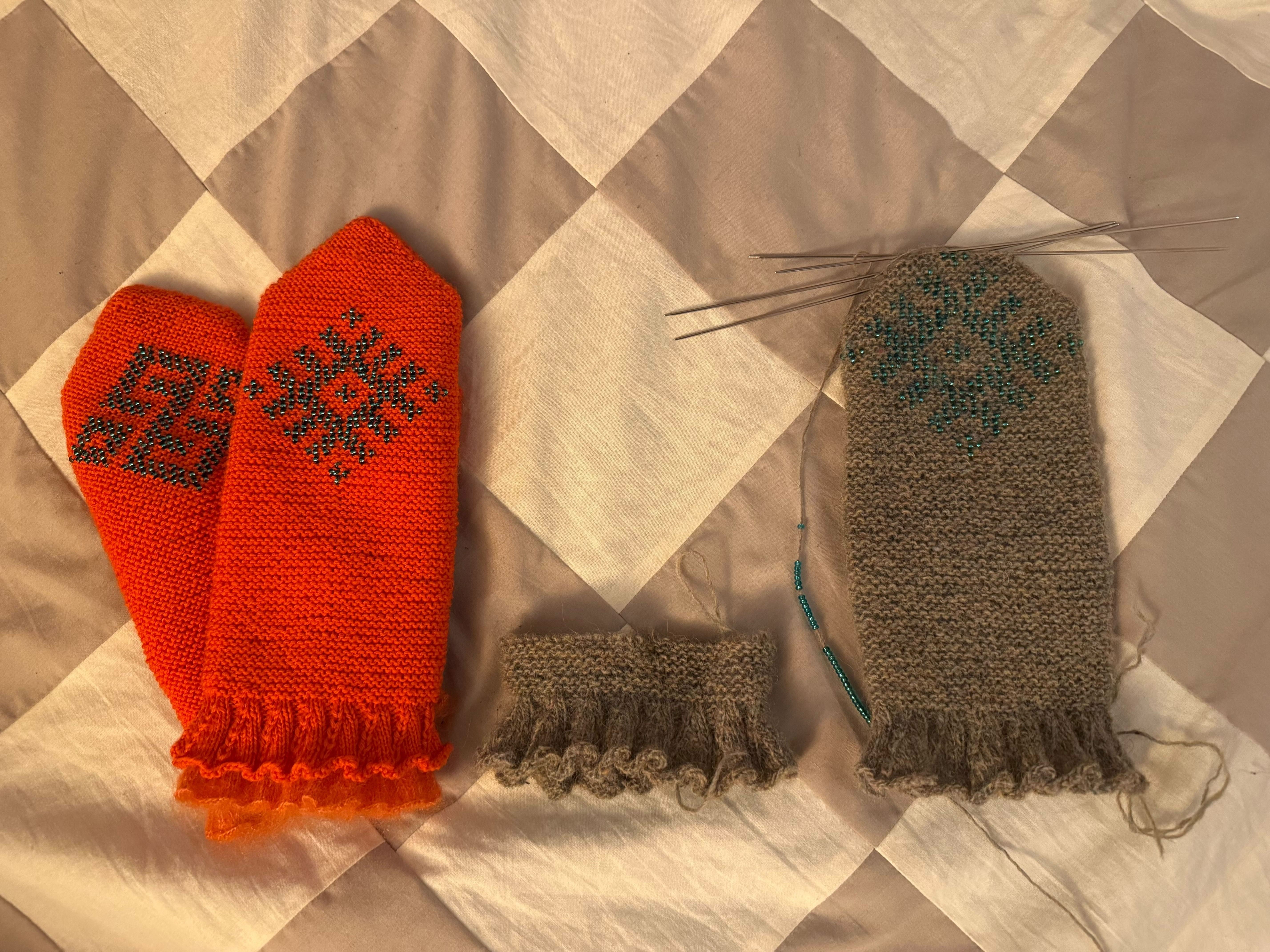
sigh
And so the road to mastery continues.
Until next week,
Julia
Woow, I'm sure glad that the unique thread will not go into history books but will continue it's existence!
Stay strong with the mittens! ❤️